Revia (Naltrexone): Opioid Antagonism for Addiction Management - An Evidence-Based Review
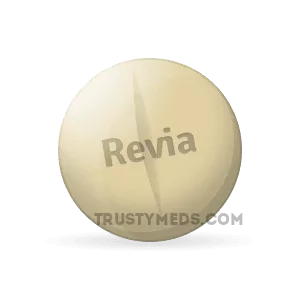
| Dosaggio del prodotto: 50 mg | |||
|---|---|---|---|
| Confezione (n.) | Per compresse | Prezzo | Acquista |
| 10 | €6.95 | €69.54 (0%) | 🛒 Aggiungi al carrello |
| 20 | €5.60 | €139.08 €111.94 (20%) | 🛒 Aggiungi al carrello |
| 30 | €5.00 | €208.62 €150.11 (28%) | 🛒 Aggiungi al carrello |
| 60 | €4.52 | €417.25 €271.38 (35%) | 🛒 Aggiungi al carrello |
| 90 | €4.07
Migliore per compresse | €625.87 €366.36 (41%) | 🛒 Aggiungi al carrello |
Sinonimi | |||
Product Description: Revia is a pharmaceutical preparation containing the active substance naltrexone hydrochloride. It is available in tablet form for oral administration and is classified as an opioid receptor antagonist. In clinical practice, Revia is primarily indicated for the maintenance of abstinence in formerly opioid-dependent patients and as an adjunct in the treatment of alcohol dependence. Its mechanism is rooted in competitive blockade of opioid receptors, which modulates the reinforcing effects of substances like alcohol and prevents the euphoric effects of opioids.
1. Introduction: What is Revia? Its Role in Modern Addiction Medicine
Revia, with the international nonproprietary name (INN) naltrexone, represents a cornerstone of pharmacological support in the management of substance use disorders. So, what is Revia used for? Fundamentally, it is an opioid receptor antagonist. In simpler terms, it blocks the brain’s opioid receptors. This action is pivotal in two main areas: first, it extinguishes the euphoric “high” from exogenous opioids like heroin or prescription painkillers, which is crucial for preventing relapse in detoxified patients. Second, and this was a more unexpected finding that reshaped its application, it modulates the neurochemical reward pathways involved in alcohol dependence, reducing the craving and the pleasurable effects of drinking. Its role has evolved from a straightforward blocking agent to a key component in comprehensive treatment programs that include counseling and psychosocial support. For the informed patient or the clinician, understanding Revia is understanding a tool that helps rewire the brain’s response to addictive substances.
2. Key Components and Pharmaceutical Profile of Revia
The composition of Revia is singular in its focus: naltrexone hydrochloride. Each tablet typically contains 50 mg of the active ingredient. This is the standard therapeutic dose for maintenance therapy. The pharmacokinetics are important here—it has good oral bioavailability and undergoes significant first-pass metabolism in the liver, with its primary active metabolite, 6-β-naltrexol, contributing to its effects. The release form is immediate, which is suitable for daily dosing under supervision or as part of a structured regimen.
A critical point regarding its profile is its long duration of action. A single 50 mg dose can provide opioid receptor blockade for approximately 24-36 hours. This allows for once-daily dosing, which improves adherence compared to more frequent regimens. However, this same property means that its effects are not immediately reversible; if a patient on Revia requires opioid analgesia for an emergency, managing pain becomes complex and requires careful, expert oversight. This isn’t a minor side note—it’s a central tenet of its safe use.
3. Mechanism of Action of Revia: Scientific Substantiation
How does Revia work? Its mechanism of action is deceptively simple in concept but profound in effect. Naltrexone is a competitive antagonist with a high affinity for mu-opioid receptors. It sits on these receptors without activating them, physically preventing molecules like heroin, oxycodone, or even the body’s own endorphins from binding and producing an effect.
In opioid dependence, this is straightforward blockade. A patient maintained on Revia who uses an opioid will experience little to no euphoria, effectively removing the primary reinforcement for the behavior. This “extinction” process can help break the conditioned cycle of use and reward.
For alcohol dependence, the mechanism is more nuanced and was a significant “failed insight” turned breakthrough. Initially, the focus was purely on opioids. But research showed that alcohol consumption stimulates the release of endogenous opioids, which in turn contribute to the feeling of pleasure and reinforcement. By blocking these opioid-mediated effects, Revia attenuates the perceived “reward” from drinking. Patients often report that alcohol “just doesn’t feel the same anymore” or that they “can stop after one or two drinks.” It doesn’t cause aversion like disulfiram; it simply reduces the neurochemical payoff, thereby helping to reduce cravings and support controlled drinking or abstinence goals. This scientific substantiation moved it into a mainstream role for alcohol use disorder.
4. Indications for Use: What is Revia Effective For?
The indications for Revia are specific and evidence-based. It is not a standalone cure but a pharmacological aid within a broader biopsychosocial treatment framework.
Revia for Opioid Use Disorder
Its use here is for the maintenance of abstinence in patients who have undergone complete opioid detoxification. The key is complete detoxification. Administering Revia to a patient with physical dependence can precipitate severe, acute withdrawal. It is used as a relapse prevention tool, creating a pharmacological barrier against the effects of illicit opioids.
Revia for Alcohol Use Disorder
This is a major indication. It is used to reduce alcohol consumption, support abstinence, and prevent relapse. Clinical evidence shows it is particularly effective in patients with high craving levels or a strong family history. It’s used for treatment as an adjunct to cognitive-behavioral therapy and other interventions.
Other Potential Applications
Off-label, low-dose naltrexone (LDN, typically 1-5 mg) has been explored for conditions like fibromyalgia and multiple sclerosis, theorized to modulate glial cell inflammation. However, this use is distinct from the standard Revia protocol and is not an approved indication, representing an area of ongoing research and some professional disagreement about protocols.
5. Instructions for Use: Dosage and Course of Administration
Clear instructions for use are non-negotiable with Revia due to the risks. The standard dosage for both alcohol and opioid dependence is 50 mg once daily. The course of administration is long-term, often spanning months to years, aligned with the chronic nature of addiction.
A critical prerequisite is the naloxone challenge test or a verified 7-10 day opioid-free period before initiation to avoid precipitated withdrawal. Dosing often starts at 25 mg (half a tablet) to assess tolerability before moving to the full 50 mg dose.
| Indication | Standard Dosage | Frequency | Key Administration Note |
|---|---|---|---|
| Alcohol Dependence | 50 mg | Once daily | Can be taken with or without food. Often taken in the morning. |
| Opioid Dependence | 50 mg | Once daily | Must be opioid-free for 7-10 days prior. Administer under supervision initially. |
Side effects are typically mild and transient, including nausea, headache, dizziness, anxiety, and insomnia. These often subside within a few days to weeks. Hepatotoxicity is a noted concern at very high doses, so baseline liver function tests are recommended.
6. Contraindications and Drug Interactions with Revia
Safety first. The contraindications are absolute:
- Current opioid use or physical dependence.
- Acute opioid withdrawal.
- Positive urine screen for opioids.
- Acute hepatitis or liver failure.
- History of hypersensitivity to naltrexone.
Drug interactions are paramount. Concomitant use with any opioid-containing medication (e.g., cough suppressants with codeine, certain antidiarrheals, or opioid analgesics) will be ineffective for pain/relief and could lead to attempting dangerous overdoses to overcome the blockade. It may also potentiate the sedative effects of thioridazine. The question “is it safe during pregnancy?” is complex; the benefit may outweigh potential risks in severe addiction, but it’s Pregnancy Category C, requiring careful individual risk-benefit analysis.
7. Clinical Studies and Evidence Base for Revia
The physician reviews and clinical studies for Revia are robust. For opioid dependence, early studies like the one by Kirchmayer et al. (Addiction, 2002) showed it significantly increased retention in treatment and reduced opioid use compared to placebo or no pharmacological treatment.
For alcohol, the COMBINE study (JAMA, 2006) was pivotal. It demonstrated that naltrexone, combined with medical management, significantly increased abstinence rates and reduced heavy drinking days compared to placebo. The evidence base consistently shows it’s not a magic bullet—it works best in engaged patients who want to change and are in structured therapy. But when it works, the effectiveness is clear: it reduces the neurobiological “pull” of addiction, giving therapy and willpower a stronger foothold.
8. Comparing Revia with Similar Products and Choosing a Quality Product
When comparing Revia with similar products, the landscape includes other formulations of naltrexone itself. The main competitor is extended-release injectable naltrexone (e.g., Vivitrol), administered monthly. The key difference is adherence: the injectable form guarantees coverage, eliminating daily decision-making, but is more expensive and requires a clinic visit. Oral Revia is more flexible and cheaper but relies on daily patient compliance.
Choosing a quality product means ensuring it’s a bioequivalent, FDA- or EMA-approved generic or the branded version from a reputable manufacturer. There’s little differentiation between generic naltrexone tablets if they meet pharmacopoeial standards. The choice is less about the pill itself and more about the treatment context and formulation (daily oral vs. monthly injectable) that best suits the patient’s lifestyle and adherence pattern.
9. Frequently Asked Questions (FAQ) about Revia
What is the recommended course of Revia to achieve results?
Treatment is typically long-term, minimum 3-6 months, but often continues for a year or more to support stable remission. It’s a maintenance therapy, similar to medication for other chronic diseases.
Can Revia be combined with disulfiram (Antabuse)?
Generally not recommended due to limited data and potential for additive hepatotoxicity. The mechanisms are different (blockade vs. aversion), and combination should only be under specialist supervision.
What happens if I need pain surgery while on Revia?
This requires urgent, proactive planning with your anesthesiologist and pain team. Opioid-based pain relief will be ineffective. Alternative, non-opioid analgesic strategies (e.g., regional anesthesia, ketamine, NSAIDs) must be employed.
Does Revia block the effects of all drugs?
No. It specifically blocks opioid receptors. It does not block the effects of stimulants (cocaine, amphetamines), benzodiazepines, cannabis, or hallucinogens.
10. Conclusion: Validity of Revia Use in Clinical Practice
In conclusion, the validity of Revia use in clinical practice is well-established for its core indications. Its risk-benefit profile is favorable when used correctly in appropriately selected and detoxified patients. It is a powerful tool that exemplifies a neurobiological approach to addiction, reducing cravings and blocking reward. However, its success is inextricably linked to its integration into a comprehensive treatment program. For the healthcare professional, it demands respect for its contraindications. For the patient, it offers a tangible, chemical ally in the arduous fight for recovery.
Personal Anecdote & Clinical Experience:
I remember when we first started using naltrexone in our clinic back in the late 90s. There was a lot of skepticism in the team—some of the old guard saw addiction as purely a failure of willpower. I had a patient, Mark, a 42-year-old carpenter with severe alcohol use disorder who’d failed multiple detoxes. He was motivated but described the craving as a “physical pull” he couldn’t ignore. We started him on Revia alongside weekly CBT. About three weeks in, he came in and said something that changed my perspective entirely. He told me, “Doc, it’s weird. I had a beer after work, like always. But I just… didn’t want the second one. It was like the voice in my head telling me to keep going was just… quieter.” That wasn’t just willpower; that was a pharmacological shift in his reward circuitry giving his conscious mind a chance.
We’ve had our struggles, no doubt. The development of our clinic protocol was messy. Our psychiatrist and our lead addiction counselor had a major disagreement on patient selection—the psychiatrist wanted to put everyone on it, the counselor argued it was useless without 100% buy-in to therapy. We settled on a middle path: Revia for those who understood it as a “crutch,” not a cure, and who were engaged in therapy. We also learned the hard way about the precipitated withdrawal. One young woman, Sarah, swore she was 10 days clean from oxycodone. Her urine screen was clean, but she hadn’t been fully honest about the timeline. Giving her that first 25mg dose… she was in horrific withdrawal within an hour. It was a brutal lesson for her and for us in verifying, double-checking, and trusting but always confirming.
The unexpected finding over years of use? The patients it helps most aren’t always the ones you’d predict. It’s not the rock-bottom cases, necessarily. It’s the high-functioning ones—the lawyers, the nurses—who have that “reward-dependent” pattern of drinking and who can leverage the subtle blunting effect to regain control. I followed Mark for five years. He’s not totally abstinent—he might have a glass of wine at a wedding. But he’s not the man who needed a six-pack to get through the night. He calls it his “insurance policy.” Another patient, Elena, on it for opioid dependence after a surgery addiction, told me last year, “Knowing the pill makes using pointless takes the option off the table. It frees up mental energy to just… live.” That’s the real-world observation you don’t get from just the clinical studies: for the right patient, it’s not just a drug; it’s a cognitive liberator.
The longitudinal follow-up is key. We see some patients for years. Some stop the medication after a stable period and do fine; others feel the cravings return and choose to stay on it indefinitely, like a diabetic on insulin. And that’s okay. This is a chronic disease model. My takeaway after two decades? Revia is a profoundly useful tool, but it’s just a tool. The hand that wields it—the therapeutic alliance, the patient’s readiness, the support system—that’s what ultimately builds the recovery. But I wouldn’t want to practice without it in the toolbox anymore. The data is solid, but it’s these individual stories of reclaimed lives that truly cement its place in modern treatment.
More info:
Popular Products
mellaril
Prodotto: Mellaril. Nome generico: Tioridazina. Appartiene alla classe dei farmaci antipsicotici tipici (o neurolettici) della serie delle fenotiazine. È stato uno dei primi farmaci ampiamente utilizzati per il trattamento delle psicosi, in particolare della schizofrenia, a partire dalla fine degli anni ‘50. La sua azione principale è attribuita al blocco dei recettori dopaminergici D2 nel sistema nervoso centrale. A differenza di altri neurolettici come l’aloperidolo, la tioridazina ha un profilo sedativo più marcato e un potenziale minore di indurre effetti extrapiramidali, ma un rischio più elevato di effetti anticolinergici e, a dosi elevate, di effetti cardiotossici (prolungamento dell’intervallo QT e torsioni di punta).
Retrovir: Terapia Antiretrovirale Fondamentale per l'HIV - Revisione Basata sull'Evidenza
Product Description This monograph details the composition, mechanism of action, clinical applications, and safety profile of Retrovir, a foundational antiretroviral medication. Retrovir, with the active substance zidovudine, is classified as a nucleoside reverse transcriptase inhibitor (NRTI). It was the first antiretroviral drug approved for the treatment of Human Immunodeficiency Virus (HIV) infection and remains a critical component in certain therapeutic regimens, including the prevention of maternal-to-child transmission. Its development marked a pivotal turning point in the management of HIV/AIDS, transitioning it from a universally fatal diagnosis to a manageable chronic condition.
VPXL: Supporto alla Funzione Sessuale Maschile - Revisione Basata sulle Evidenze
Iniziamo con una descrizione chiara di cosa stiamo parlando. VPXL non è un farmaco, ma un integratore alimentare che viene spesso ricercato online per scopi specifici legati alla salute maschile, in particolare in ambito di performance sessuale e benessere uro-genitale. È fondamentale chiarire subito che si tratta di un prodotto a base di ingredienti naturali, vitamine ed estratti vegetali, e non di un dispositivo medico o di un farmaco soggetto a prescrizione.
seroquel
Prima di tutto, chiariamo di cosa stiamo parlando. Seroquel è il nome commerciale di un principio attivo chiamato quetiapina. Appartiene alla classe degli antipsicotici atipici, o di seconda generazione, e la sua storia è un po’ diversa dai vecchi neurolettici. Quando è arrivato, verso la fine degli anni ‘90, c’era un certo ottimismo: sembrava offrire l’efficacia sui sintomi positivi della schizofrenia (come deliri e allucinazioni) con un profilo di effetti collaterali motori – pensate alla acatisia o ai parkinsonismi indotti dai farmaci più vecchi – potenzialmente migliore.
Fildena Strong: Supporto Naturale per la Funzione Erettile - Revisione Basata sull'Evidenza
Fildena Strong è un integratore alimentare formulato specificamente per il supporto della funzione erettile maschile. Contiene una combinazione sinergica di ingredienti naturali, tra cui estratti vegetali standardizzati, amminoacidi e micronutrienti, che agiscono su diversi meccanismi fisiologici coinvolti nella vascolarizzazione del tessuto cavernoso, nella produzione di ossido nitrico e nella gestione dello stress. A differenza dei farmaci da prescrizione, non contiene principi attivi sintetici come il sildenafil, ma punta a sostenere le condizioni fisiologiche di base necessarie per una risposta sessuale sana.
Ecosprin: Prevenzione Cardio e Cerebrovascolare Evidence-Based - Monografia Completa
Ecosprin è un farmaco ben noto e ampiamente utilizzato, appartenente alla classe degli antiaggreganti piastrinici. Il suo principio attivo è l’acido acetilsalicilico a basso dosaggio, comunemente noto come aspirina. A differenza della classica aspirina utilizzata come analgesico o antinfiammatorio, Ecosprin è formulato in dosaggi specifici, tipicamente 75 mg, 100 mg o 150 mg, per sfruttare il suo effetto inibitore irreversibile sull’aggregazione piastrinica. Questo meccanismo lo rende una pietra angolare nella prevenzione secondaria di eventi cardiovascolari e cerebrovascolari, come infarto miocardico e ictus ischemico.
Glucovance: Βελτιωμένος Γλυκαιμικός Έλεγχος στον Σακχαρώδη Διαβήτη Τύπου 2 - Μια Κλινική Ανασκόπηση
Για να το πω απλά, το Glucovance δεν είναι ούτε συμπλήρωμα διατροφής, ούτε συμβατική συσκευή. Είναι ένα από τα πιο διαδεδομένα και μελετημένα σχήματα φαρμακευτικής αγωγής για τον σακχαρώδη διαβήτη τύπου 2, ένας συνδυασμός δύο ενεργών ουσιών σε ένα δισκίο: μετφορμίνη και γλιβενκλαμίδη. Η ιδέα πίσω από αυτόν τον συνδυασμό είναι τόσο απλή όσο και ισχυρή: να επιτευχθεί καλύτερος γλυκαιμικός έλεγχος με δυο συμπληρωματικούς μηχανισμούς δράσης, συχνά με χαμηλότερη δόση του καθενός, μειώνοντας πιθανώς τις ανεπιθύμητες ενέργειες.
Atorlip 10: Supporto Sinergico per il Controllo del Colesterolo LDL - Monografia Evidenze-Based
Prodotto: Atorlip 10 è un integratore alimentare innovativo che combina una dose standardizzata di Monacolina K da riso rosso fermentato (10 mg) con un complesso sinergico di cofattori nutrizionali, tra cui Coenzima Q10, Berberina e Astaxantina. È formulato specificamente per supportare il mantenimento di livelli di colesterolo LDL già nella norma in individui sani, come parte di uno stile di vita attivo e di una dieta equilibrata. Non è un farmaco e non intende sostituire terapie ipolipemizzanti prescritte.
trim z
Trim Z rappresenta un dispositivo medico di classe IIa innovativo, progettato per il monitoraggio continuo e non invasivo dei parametri metabolici basali. Si presenta come un cerotto transdermico discreto che, applicato sull’addome, misura in tempo reale i livelli di chetoni espirati (acetone) attraverso la pelle, fornendo un indice diretto dello stato di chetosi e dell’efficienza del metabolismo lipidico. Il suo sviluppo nasce dall’esigenza di superare i limiti dei tradizionali stick urinari per chetoni, offrendo ai professionisti della salute e agli utenti un feedback oggettivo, continuo e quantitativo durante regimi dietetici chetogenici, terapie per il controllo glicemico o programmi di gestione del peso.