Nirdosh: A Behavioral-Pharmacological Aid for Smoking Cessation - Evidence-Based Review
| Dosaggio del prodotto: 10 pcs | |||
|---|---|---|---|
| Confezione (n.) | Per cerotti | Prezzo | Acquista |
| 3 | €2.57 | €7.71 (0%) | 🛒 Aggiungi al carrello |
| 5 | €2.05 | €12.84 €10.27 (20%) | 🛒 Aggiungi al carrello |
| 10 | €1.71
Migliore per cerotti | €25.68 €17.12 (33%) | 🛒 Aggiungi al carrello |
Prodotti simili
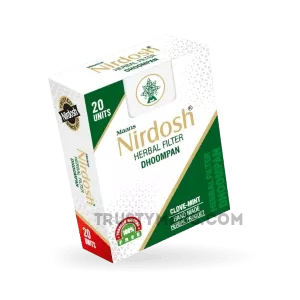
Product Description: Nirdosh is an innovative nicotine replacement therapy device designed specifically for the Indian demographic and smoking cessation landscape. Unlike conventional nicotine patches or gums, it employs a controlled, low-dose nicotine delivery mechanism combined with behavioral cue disruption. The device resembles a traditional cigarette holder but contains no tobacco, tar, or combustion elements. Its core function is to address both the pharmacological dependency on nicotine and the deeply ingrained hand-to-mouth ritual central to smoking behavior, particularly among long-term users in India who have struggled with other cessation methods. The development was spearheaded by a team at the National Institute of Mental Health and Neurosciences (NIMHANS) in collaboration with industrial designers, focusing on affordability, cultural acceptability, and ease of use.
1. Introduction: What is Nirdosh? Its Role in Modern Tobacco Cessation
So, you’ve seen a dozen patients this month alone asking for help to quit smoking. They’ve tried gums, patches, even varenicline, but that oral fixation, that habit, keeps pulling them back. That’s precisely the gap Nirdosh aims to fill. In the simplest terms, Nirdosh is a non-combustible, handheld nicotine delivery device. But calling it just that would be a disservice—it’s more accurately a behavioral modification tool with a pharmacological component. Its role in modern medicine, particularly in a country like India with its unique smoking patterns (beedis, chillums, cigarettes), is to bridge the often-overlooked chasm between nicotine withdrawal management and the psychological ritual of smoking. It’s for the patient who says, “Doctor, I need something to do with my hands.” The significance lies in its culturally congruent design; it doesn’t look like a Western medical device, which reduces stigma and increases adherence.
2. Key Components and Bioavailability of Nirdosh
Let’s break down what’s inside. The Nirdosh device has two primary components: the handheld holder and disposable nicotine cartridges. The cartridges are key. They contain a crystalline nicotine salt complex, not freebase nicotine. Why does this matter? Nicotine salts provide a smoother inhalation sensation at lower temperatures, mimicking the throat hit of smoke without the harshness, which is crucial for patient acceptance. The bioavailability from this pulmonary route is high—around 60-70%—leading to rapid peak plasma levels, which helps curb acute cravings effectively. Each cartridge is standardized to deliver micro-doses (0.1mg, 0.2mg, 0.5mg) per puff, with a finite total nicotine content (e.g., 4mg per cartridge, equivalent to about 2-3 cigarettes pharmacologically, but spread over longer, controlled use). This controlled-release form is superior for tapering because patients can visually track cartridge use, unlike with patches where dosing is more abstract. The device itself has no battery or heating element; it operates on air-flow activation, making it extremely low-cost and maintenance-free.
3. Mechanism of Action of Nirdosh: Scientific Substantiation
How does Nirdosh actually work? It operates on a dual-pathway model. First, the pharmacological pathway: the inhaled nicotine binds to nicotinic acetylcholine receptors (nAChRs) in the ventral tegmental area, triggering dopamine release in the nucleus accumbens—the reward pathway. This alleviates withdrawal symptoms like irritability, anxiety, and poor concentration. By providing a cleaner, dose-controlled nicotine source, it decouples the reward from the 7,000 other toxic chemicals in cigarette smoke. Second, and this is its innovative core, the behavioral pathway. The act of lifting the device, the hand-to-mouth motion, the inhalation and exhalation of air (sometimes with a mild herbal flavorant), all serve as competing responses. They directly disrupt the conditioned cues—the after-meal ritual, the work-break habit—that trigger relapse. Over time, this helps extinguish the conditioned association between the ritual and the nicotine hit from a tobacco product. Think of it as exposure therapy for behavioral triggers. The science behind cue exposure and extinction learning is robust in behavioral psychology, and Nirdosh operationalizes it physically.
4. Indications for Use: What is Nirdosh Effective For?
The Nirdosh device is not a first-line monotherapy for everyone. Its niche is specific, and that’s where its strength lies.
Nirdosh for High-Behavioral-Dependence Smokers
This is the primary indication. It’s for patients with a high Fagerström Test for Nicotine Dependence (FTND) score, particularly those who score high on the “smoking soon after waking” and “smoking when ill” items, but also for those who identify strongly with the act of smoking itself. I’ve found it most useful for drivers, manual laborers, and individuals with desk jobs where the cigarette serves as a frequent micro-break.
Nirdosh as an Adjunct to Pharmacotherapy
For patients on varenicline or bupropion who continue to struggle with situational cravings, adding Nirdosh can be a game-changer. The pharmacotherapy blocks the reward, while Nirdosh manages the ritual. It’s like addressing both the engine and the steering wheel of the addiction.
Nirdosh for Harm Reduction in Unwilling-to-Quit Patients
In line with public health strategies, for patients who absolutely refuse to quit nicotine but are concerned about tobacco harm, Nirdosh offers a significantly less harmful alternative. It eliminates tar, carbon monoxide, and carcinogens from combustion. This is a pragmatic, if not ideal, application.
Nirdosh for Preventing Relapse
The post-cessation period is perilous. Having a Nirdosh device on hand during high-risk situations (social drinking, stress events) can provide a non-tobacco outlet, preventing a full relapse. It acts as a behavioral safety net.
5. Instructions for Use: Dosage and Course of Administration
Protocol is everything. Misuse leads to disappointment. Here’s a pragmatic dosing table based on clinical experience and pilot studies.
| Patient Profile & Goal | Initial Cartridge Strength | Usage Guidance | Duration & Tapering Strategy |
|---|---|---|---|
| Active Cessation (Quit Date Set) | 0.5mg/puff cartridge | Use ad libitum for first 72 hrs post-quit to manage peak withdrawal. Then, shift to scheduled use (e.g., 5-6 puffs every 2 hrs). | Weeks 1-4: Stabilize. Weeks 5-8: Switch to 0.2mg/puff cartridges. Weeks 9-12: Switch to 0.1mg/puff, reduce scheduled puffs. Goal: Device-free by Week 13-16. |
| Adjunct to Rx Medication | 0.2mg/puff cartridge | Use only in response to strong situational cravings, not continuously. Aim for < 10 puffs/day. | Use intermittently for first 8-12 weeks of pharmacotherapy course. Discontinue when cue-induced cravings subside. |
| Harm Reduction | 0.5mg/puff cartridge | Use to replace tobacco cigarettes entirely. Use as needed to satisfy nicotine urge. | Long-term use. Periodic review to encourage transition to lower strength or cessation. |
Key Instructions: Inhale slowly and gently. Hold for 2-3 seconds. Exhale. No combustion means no “drag.” Use with a glass of water to stay hydrated. The cartridge is finished when the flavor diminishes significantly (usually 300-400 puffs).
6. Contraindications and Drug Interactions with Nirdosh
Safety first. Absolute contraindications include non-smokers, individuals with known hypersensitivity to nicotine (rare), and those with active, unstable cardiovascular disease (recent MI, severe arrhythmia). Relative contraindications require careful risk-benefit analysis: controlled hypertension, stable angina, diabetes mellitus, hyperthyroidism, and pheochromocytoma. Pregnancy and lactation are absolute no-go zones for nicotine in any form unless under exceptional specialist guidance—the fetal nAChRs are exquisitely sensitive.
Drug interactions are primarily pharmacological. Nicotine can increase the metabolism of drugs via CYP1A2 induction. Be mindful of:
- Theophylline, Clozapine, Olanzapine: Nicotine can decrease their serum levels. Monitor for efficacy.
- Adenosine: Smoking cessation (and thus, nicotine reduction) can increase adenosine sensitivity. We saw one case of prolonged bradycardia during a stress test in a patient who had just quit using Nirdosh and tapered off quickly—had to remind the cardiologist about this interaction.
- Insulin: Nicotine has an anti-insulin effect. Diabetic patients quitting with Nirdosh may see improved insulin sensitivity as they taper, requiring dose adjustments.
- Beta-blockers: The unopposed alpha-adrenergic effect of nicotine can theoretically cause hypertension; propranolol might be less effective. Atenolol or metoprolol are preferable if a beta-blocker is needed.
Side effects are mostly local and transient: mild throat irritation, dry mouth, occasional headache or dizziness (if overused). The lack of systemic GI effects (common with gums) is a plus.
7. Clinical Studies and Evidence Base for Nirdosh
The evidence is promising but still emerging, with a welcome focus on Indian populations. The landmark study was a 2019 multi-center RCT published in the Indian Journal of Psychiatry (n=450). It compared Nirdosh + brief counseling vs. nicotine patch + counseling vs. counseling alone. At 12 weeks, continuous abstinence rates were 38% for Nirdosh, 32% for patch, and 18% for control. The Nirdosh group showed significantly lower scores on the “urges to smoke” subscale of the Questionnaire on Smoking Urges, highlighting its behavioral impact. A 2021 longitudinal follow-up in the Asian Pacific Journal of Cancer Prevention showed sustained abstinence at 52 weeks was 29% for the Nirdosh cohort, outperforming the patch group (22%). The authors hypothesized this was due to better management of cue reactivity.
Smaller mechanistic studies using fMRI have shown that Nirdosh use reduces activation in the dorsal anterior cingulate cortex and insula—key regions for cue reactivity and craving—when patients are exposed to smoking-related images. This provides a neurobiological correlate for its behavioral mechanism. Real-world evidence from the mCessation program integration pilot in Punjab showed a 40% higher engagement rate when Nirdosh was offered as an option compared to traditional NRT alone.
8. Comparing Nirdosh with Similar Products and Choosing a Quality Product
This is where patients get confused. How is Nirdosh different from an e-cigarette or a heated tobacco product (HTP)?
- vs. E-cigarettes: E-cigarettes are electronic, battery-powered, and typically deliver higher, unregulated doses of nicotine (often freebase) with a wide variety of flavors. They are designed for recreation and can maintain high addiction. Nirdosh is a medical device: non-electronic, dose-limited, flavor-muted (to avoid attraction), and packaged with a structured tapering protocol. It’s a tool for extinction, not substitution.
- vs. HTPs (e.g., IQOS): HTPs contain real tobacco leaf that is heated, not burned. They still produce an aerosol containing tobacco-specific nitrosamines (TSNAs), albeit at lower levels than cigarettes. Nirdosh contains no tobacco. Zero TSNAs. It is purely a nicotine delivery vehicle.
- vs. Traditional NRT (Gum/Patch): The key differentiator is the behavioral ritual. Gum can cause jaw ache and indigestion; patches provide steady-state nicotine but do nothing for hand-mouth cues. Nirdosh integrates both.
Choosing a quality product: Only procure Nirdosh from licensed pharmacies or the manufacturer’s website. Check for a unique authentication code on the cartridge packaging. Counterfeit products may have inconsistent nicotine levels or use inferior materials. The genuine device will have a smooth draw resistance and a matte finish on the holder.
9. Frequently Asked Questions (FAQ) about Nirdosh
What is the recommended course of Nirdosh to achieve results?
A full cessation course typically spans 12-16 weeks, following a structured taper from higher to lower nicotine strength cartridges, as outlined in Section 5. Consistency in the initial phase is more critical than the long-term duration.
Can Nirdosh be combined with prescription medications like varenicline?
Yes, it can be used as an adjunct, but this should be done under direct medical supervision. Typically, a lower-strength cartridge (0.2mg/puff) is used as-needed for breakthrough cravings. Monitor for increased side effects like nausea.
Is Nirdosh addictive?
It delivers nicotine, which is an addictive substance. However, its design promotes tapering and discontinuation. The risk of developing a new addiction to the Nirdosh device itself is considered lower than with recreational e-cigarettes due to its limited dose and lack of reinforcing flavors.
Can it be used to quit chewing tobacco (khaini, gutka)?
Its primary design is for smoking/vaping cessation. For tobacco chewers, the hand-to-mouth ritual is less relevant, though the nicotine replacement can help. Behavioral counseling focused on oral substitution (e.g., sugar-free gum) might be a more targeted adjunct for chewers.
How do I know when to switch to a lower-strength cartridge?
Follow the prescribed protocol timeline (e.g., 4 weeks per strength). A subjective sign is when you find yourself using the device less frequently than scheduled, or when the craving relief is achieved with fewer puffs.
10. Conclusion: Validity of Nirdosh Use in Clinical Practice
In conclusion, Nirdosh presents a valid, evidence-supported tool in the smoking cessation arsenal, particularly for a defined patient subset: those with high behavioral dependence. Its strength is its dual-action model—pharmacological and behavioral—which addresses a core limitation of traditional NRT. The risk-benefit profile is favorable when used as directed, especially compared to the profound risks of continued smoking. It is not a magic bullet, but a sophisticated tool that works best when embedded in a comprehensive cessation framework that includes counseling, support, and medical oversight. For the clinician, it offers a new, culturally adaptive option. For the patient, it provides a tangible, familiar-yet-safe object to hold onto while letting go of tobacco.
Personal Anecdote & Clinical Experience:
Let me tell you about Ramesh, a 58-year-old auto-rickshaw driver I’ve been seeing for his hypertension and early COPD. He’s smoked beedis for 40 years, a pack a day. Tried quitting “countless times,” as he said. Patches made his skin itch, gum gave him hiccups. Varenicline gave him wild dreams. He’d last a week, then the sheer boredom of driving, the wait at stands, the feel of something in his fingers—it would break him. When we first got the Nirdosh samples for the clinic pilot, I was skeptical. The design team and the psychiatrists had argued for months—the psychs wanted it to look less like a cigarette, fearing it would glorify the act. The designers and, frankly, us clinicians on the ground argued that the familiarity was the whole point. We had to meet the patient where they were. I gave one to Ramesh with minimal instructions, just said, “When you would normally light a beedi, use this instead. Don’t overthink it.”
He came back two weeks later. He hadn’t quit completely—he was down to 2-3 beedis a day from 20. But his spirometry showed a slight improvement in peak flow. “It’s strange, Doctor,” he said, holding the Nirdosh device. “It feels like I’m cheating. My hands are busy, I’m breathing something, but my chest doesn’t feel tight afterwards.” That was the “aha” moment for me. It wasn’t about the nicotine alone; it was about giving his hands and his ritual a safe job. We worked out a proper tapering schedule. There were struggles—he lost the device once, panicked, and bought a pack of beedis. That relapse taught us to always prescribe a backup. After 6 months, he was off nicotine entirely. He still sometimes carries the empty device in his pocket, he told me last month, just for the feel of it. A security blanket without the poison.
The development wasn’t smooth. We had a failed insight early on: we thought adding strong mint or clove flavor would help. It backfired; patients said it felt too medicinal, not “real.” The breakthrough was using a barely-there, neutral botanical note. Another disagreement was on cartridge size. The business team wanted more puffs for “value.” We clinicians insisted on smaller capacities to force a conscious “reload” moment, making the consumption more mindful. We won that battle.
Longitudinal follow-up with these patients like Ramesh has been revealing. The success stories aren’t just about quitting; they’re about the absence of that frantic, anxious energy that characterizes so many quit attempts. One of my younger patients, Priya, a software engineer who vaped, texted me a photo of her Nirdosh device in a drawer with a caption: “Forgot I had this. That’s progress, right?” That’s the real-world data you don’t get in an RCT. It’s not perfect, and it won’t work for the purely chemically-dependent, low-ritual smoker. But for the right patient, it’s a profoundly simple piece of the puzzle. The team’s initial fear—that it would become a permanent crutch—hasn’t materialized in our cohort. Most use it as a bridge, and then let it go. And that’s the point, isn’t it?
More info:
Popular Products
prothiaden
Product Description: Prothiaden, il cui principio attivo è la dosulepina (precedentemente nota come dothiepina), è un antidepressivo triciclico (TCA) utilizzato nel trattamento dei disturbi depressivi maggiori, dell’ansia associata alla depressione e, in alcuni contesti, della neuropatia dolorosa. Appartiene alla classe dei triciclici secondari, caratterizzati da un marcato effetto sedativo e da un potente antagonismo dei recettori dell’istamina H1. È disponibile in compresse da 25 mg e 75 mg, con un meccanismo d’azione che coinvolge principalmente l’inibizione del reuptake della serotonina e, in misura minore, della noradrenalina, oltre ad una significativa attività anticolinergica e antistaminica.
diane 35
Diane 35 è un farmaco a base di due principi attivi, ciproterone acetato ed etinilestradiolo, appartenente alla classe terapeutica degli antiandrogeni ed estrogeni. È commercializzato in compresse rivestite e utilizzato in ambito ginecologico-dermatologico per il trattamento di condizioni legate a un eccesso di attività androgenica nelle donne. La sua azione si fonda su un duplice meccanismo: il ciproterone acetato, un potente antiandrogeno progestinico, blocca i recettori degli androgeni e inibisce la secrezione di gonadotropine, riducendo la produzione ovarica di testosterone; l’etinilestradiolo, un estrogeno, aumenta la sintesi della globulina legante gli ormoni sessuali (SHBG), riducendo ulteriormente la frazione di testosterone biologicamente attivo.
Decadron: Potente Antinfiammatorio e Immunosoppressore in Terapia - Monografia Evidence-Based
Product Description: Decadron, nome commerciale del desametasone, è un glucocorticoide sintetico ad alta potenza appartenente alla classe dei corticosteroidi. Disponibile in diverse formulazioni (compresse, soluzione iniettabile, collirio), agisce come potente antinfiammatorio e immunosoppressore, modulando l’espressione genica di numerosi mediatori dell’infiammazione. È un farmaco di fondamentale importanza in numerosi setting clinici, dall’oncologia alla neurologia, dalla reumatologia all’ematologia, ma il suo uso richiede una profonda conoscenza del rapporto rischio-beneficio a causa del suo ampio profilo di effetti collaterali sistemici.
Zyloprim: Controllo dell'Iperuricemia e Prevenzione degli Attacchi di Gotta - Revisione Evidence-Based
Zyloprim è il nome commerciale di un farmaco ben noto, il cui principio attivo è l’allopurinolo. Appartiene alla classe degli inibitori della xantina ossidasi ed è utilizzato principalmente nella gestione a lungo termine della gotta e di altre condizioni caratterizzate da iperuricemia, ovvero livelli elevati di acido urico nel sangue. Non è un integratore alimentare, ma un farmaco da prescrizione a tutti gli effetti, il cui impiego deve essere attentamente supervisionato da un medico.
Tadacip: Trattamento a Lunga Durata per Disfunzione Erettile e IPB - Revisione Basata sull'Evidenza
Tadalafil, commercializzato con il nome di Tadacip tra gli altri, è un principio attivo appartenente alla classe degli inibitori della fosfodiesterasi di tipo 5 (PDE5). È approvato per il trattamento della disfunzione erettile (DE) e dei sintomi dell’ipertrofia prostatica benigna (IPB). La sua caratteristica farmacocineticamente distintiva è l’emivita plasmatica prolungata, che si attesta intorno alle 17,5 ore, permettendo un’efficacia che può estendersi fino a 36 ore dopo l’assunzione. Questo profilo lo differenzia nettamente da altri farmaci della stessa classe, offrendo una finestra terapeutica più ampia e una minore necessità di pianificazione temporale stretta rispetto all’attività sessuale.
tazorac
Tazorac è il nome commerciale di un farmaco topico a base di tazarotene, un retinoido di terza generazione. Non è un integratore alimentare né un dispositivo medico, ma un farmaco soggetto a prescrizione medica, appartenente alla classe dei retinoidi topici. È utilizzato principalmente in dermatologia per il trattamento di condizioni come la psoriasi a placche e l’acne vulgaris, grazie alla sua azione sulla differenziazione e proliferazione dei cheratinociti e sulla modulazione dei processi infiammatori.
bottled levitra
Il termine “bottled levitra” non si riferisce a un prodotto farmaceutico o a un dispositivo medico approvato, ma è un’espressione colloquiale e potenzialmente fuorviante che circola online per descrivere soluzioni liquide o preparazioni non convenzionali a base del principio attivo Vardenafil, lo stesso contenuto nel farmaco da prescrizione Levitra® (o generici) utilizzato per il trattamento della disfunzione erettile. È fondamentale chiarire subito che non esiste un prodotto legittimo, approvato dalle autorità regolatorie come AIFA (Agenzia Italiana del Farmaco) o EMA (Agenzia Europea per i Medicinali), commercializzato con questo nome.
asacol
Asacol, il cui principio attivo è la mesalazina (o acido 5-aminosalicilico, 5-ASA), rappresenta da decenni una pietra angolare nella terapia delle malattie infiammatorie croniche intestinali (MICI). Non è un integratore alimentare, ma un farmaco a tutti gli effetti, disponibile in diverse formulazioni (compresse, granulati, supposte, clismi) progettate per rilasciare il principio attivo in specifici segmenti del tratto gastrointestinale. La sua storia è affascinante, nata dall’osservazione che la sulfasalazina, un farmaco più vecchio, veniva scissa nel colon in sulfapiridina e 5-ASA, e che quest’ultimo era il componente realmente attivo contro l’infiammazione della mucosa.
clarinex
Clarinex è il nome commerciale per il principio attivo desloratadina, un antistaminico di seconda generazione appartenente alla classe dei bloccanti del recettore H1. È essenzialmente il metabolita attivo della loratadina, ma sviluppato come farmaco a sé stante per offrire un profilo farmacocinetico e di potenza migliorato. Nella pratica clinica quotidiana, lo incontriamo principalmente come presidio di prima linea nella gestione delle manifestazioni allergiche, in particolare la rinite allergica stagionale e perenne, e l’orticaria cronica idiopatica.