Alavert: Rapid and Non-Sedating Relief for Allergic Rhinitis - Evidence-Based Review
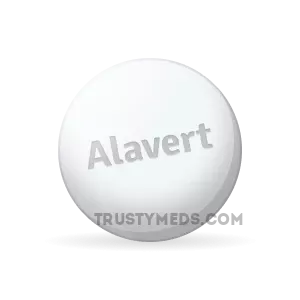
Alavert is a well-established over-the-counter (OTC) antihistamine medication, with its active ingredient being loratadine. It belongs to the second-generation, non-sedating class of H1-receptor antagonists, primarily indicated for the symptomatic relief of allergic rhinitis and chronic idiopathic urticaria. Unlike first-generation antihistamines, loratadine is designed to selectively antagonize peripheral H1 receptors with minimal penetration of the blood-brain barrier, thereby significantly reducing the incidence of drowsiness and anticholinergic side effects. Its role in modern allergy management is significant, offering patients a foundational, accessible therapy for controlling histamine-mediated symptoms such as sneezing, rhinorrhea, pruritus, and lacrimation.
1. Introduction: What is Alavert? Its Role in Modern Allergy Management
Alavert is the brand name for loratadine, a second-generation piperidine antihistamine. What is Alavert used for? Its primary medical applications are the relief of symptoms associated with seasonal allergic rhinitis (hay fever), such as sneezing, runny nose, itchy/watery eyes, and itching of the nose or throat, as well as the treatment of skin manifestations of chronic idiopathic urticaria (hives). Since its introduction, it has become a cornerstone in OTC allergy therapy due to its favorable efficacy and safety profile. The benefits of Alavert extend to its convenience—typically once-daily dosing—and its reputation for causing less sedation than older agents like diphenhydramine, making it suitable for patients who need to remain alert.
2. Key Components and Pharmaceutical Form of Alavert
The composition of Alavert is centered on its single active pharmaceutical ingredient: loratadine. It is chemically described as ethyl 4-(8-chloro-5,6-dihydro-11H-benzo[5,6]cyclohepta[1,2-b]pyridin-11-ylidene)-1-piperidinecarboxylate. Alavert is commonly available in several release forms to suit patient preferences and needs, including orally disintegrating tablets (ODTs), standard tablets, and syrup. The ODT formulation is particularly notable; it dissolves rapidly on the tongue without water, which enhances compliance, especially in pediatric populations or those with dysphagia. In terms of bioavailability, loratadine is rapidly and well absorbed from the gastrointestinal tract, with peak plasma concentrations occurring approximately 1-2 hours post-administration. It undergoes extensive first-pass metabolism in the liver, primarily via the cytochrome P450 enzyme CYP3A4 and, to a lesser extent, CYP2D6, to form its active metabolite, descarboethoxyloratadine.
3. Mechanism of Action of Alavert: Scientific Substantiation
Understanding how Alavert works requires a look at the pathophysiology of allergic reactions. Upon exposure to an allergen, sensitized mast cells degranulate, releasing histamine and other inflammatory mediators. Histamine binds to H1 receptors on vascular endothelial cells, nerve endings, and glandular tissues, leading to vasodilation, increased vascular permeability, pruritus, and glandular secretion. The mechanism of action of loratadine is competitive, reversible antagonism at these peripheral H1 receptors. By blocking the receptor site, it prevents histamine from binding and initiating the cascade of symptoms. Crucially, its molecular structure is designed to be highly lipophobic, which limits its ability to cross the blood-brain barrier. This selective peripheral action is the key scientific rationale behind its non-sedating property, as it minimizes interaction with H1 receptors in the central nervous system. Its effects on the body are therefore predominantly confined to the site of allergic inflammation.
4. Indications for Use: What is Alavert Effective For?
The indications for use of Alavert are well-defined based on robust clinical trials. It is effective for the treatment and symptomatic management of the following conditions:
Alavert for Seasonal Allergic Rhinitis
This is the most common indication. Clinical studies demonstrate significant reduction in total symptom scores (TSS), including nasal congestion (particularly when combined with a decongestant in some formulations), sneezing, rhinorrhea, and ocular symptoms compared to placebo.
Alavert for Perennial Allergic Rhinitis
For year-round allergies triggered by indoor allergens like dust mites, pet dander, or mold, Alavert provides consistent daily symptom control, improving quality of life and sleep.
Alavert for Chronic Idiopathic Urticaria
In cases of hives where no specific trigger can be identified, loratadine effectively reduces the number, size, and pruritus associated with wheals. It is a first-line pharmacological treatment for this often-frustrating condition.
Alavert for Allergic Conjunctivitis Symptoms
While not a topical ocular agent, systemic administration of Alavert helps alleviate the itchy, watery eyes commonly associated with allergic rhinoconjunctivitis.
5. Instructions for Use: Dosage and Course of Administration
Clear instructions for use are vital for optimal outcomes with Alavert. The standard dosage is consistent across its indications for adults and children aged 6 years and older.
| Patient Population | Dosage (loratadine) | Frequency | Administration Notes |
|---|---|---|---|
| Adults & Children (≥12 years) | 10 mg | Once daily | With or without food. ODT dissolves on tongue. |
| Children (6-11 years) | 10 mg (or 5 mg syrup) | Once daily | Use pediatric syrup or ODT for accurate dosing. |
| Children (2-5 years) | 5 mg | Once daily | Use only the pediatric syrup formulation. |
| Renal/Hepatic Impairment | 10 mg | Every other day | Due to reduced clearance. |
The course of administration is typically continuous for the duration of allergen exposure (e.g., throughout pollen season) or as long as symptoms of chronic urticaria persist. It is most effective when taken prophylactically or at the first sign of symptoms, rather than intermittently after symptoms become severe.
6. Contraindications and Drug Interactions with Alavert
Alavert is generally well-tolerated, but certain contraindications and interactions must be respected. Contraindications include known hypersensitivity to loratadine or any component of the formulation. While generally safe, caution is advised regarding use during pregnancy and lactation; it should only be used if clearly needed and under medical supervision, as human data is limited.
Drug Interactions: The most significant interactions involve potent inhibitors of the CYP3A4 enzyme system, such as ketoconazole, erythromycin, and cimetidine. These drugs can inhibit the metabolism of loratadine, leading to increased plasma levels. While clinical significance at OTC doses is often minimal, monitoring for potential increased side effects (like headache or somnolence) is prudent. No clinically meaningful interactions with alcohol have been demonstrated, reinforcing its non-sedating claim, but general caution is always advised.
Side Effects: The side effect profile is favorable. The most commonly reported (and often similar to placebo in trials) are headache, somnolence, fatigue, and dry mouth. True sedation is uncommon but can occur in a small subset of individuals.
7. Clinical Studies and Evidence Base for Alavert
The scientific evidence supporting loratadine is extensive. Early pivotal, randomized, double-blind, placebo-controlled trials established its efficacy. For instance, a study published in the Journal of Allergy and Clinical Immunology demonstrated that a single 10mg dose of loratadine provided significant relief from seasonal allergic rhinitis symptoms within 1-3 hours, with effects lasting 24 hours. Another study in Annals of Allergy on chronic urticaria showed loratadine significantly reduced pruritus and wheal counts compared to placebo over a 4-week period.
Later real-world evidence and comparative studies have solidified its position. Physician reviews often highlight its reliability as a first-line OTC option, especially for patients who experienced sedation with older antihistamines. Its effectiveness, combined with its low side effect burden, has made it a standard against which newer agents are often compared.
8. Comparing Alavert with Similar Products and Choosing a Quality Product
When patients search for Alavert similar products or ask which allergy medicine is better, the conversation typically involves other second-generation antihistamines like cetirizine (Zyrtec), fexofenadine (Allegra), and levocetirizine (Xyzal).
- vs. Cetirizine: Cetirizine may have a slightly faster onset of action and be marginally more potent for skin itching, but it has a higher reported incidence of sedation (approx. 10-15% vs. loratadine’s ~1-8%). Alavert is often preferred for those sensitive to drowsiness.
- vs. Fexofenadine: Fexofenadine has virtually no sedation and no drug interactions via CYP450, but it may be less potent mg-for-mg for some patients and is often more expensive. Alavert offers a strong balance of efficacy and value.
- vs. Levocetirizine: The active enantiomer of cetirizine, it is potent but carries a similar sedation risk profile to its parent compound.
How to choose? For a quality product, look for reputable manufacturers (the original is from Bayer). The ODT formulation of Alavert is a key differentiator for those who prefer convenience. The choice often comes down to individual patient response, cost, and formulation preference.
9. Frequently Asked Questions (FAQ) about Alavert
What is the recommended course of Alavert to achieve results?
For allergic rhinitis, take it daily throughout the exposure period. Improvement in symptoms is often seen within the first day, but maximum benefit may take a few days of consistent use. For urticaria, continuous use is needed to suppress wheal formation.
Can Alavert be combined with decongestants like pseudoephedrine?
Yes, there are combination products available (loratadine/pseudoephedrine). However, these are behind-the-pharmacy-counter due to pseudoephedrine regulations. They are useful for significant nasal congestion but are contraindicated in patients with hypertension, heart disease, or thyroid disorders.
Is Alavert safe for long-term daily use?
Clinical studies have evaluated safety for up to 6 months of continuous daily dosing with no significant increase in adverse events. It is considered safe for long-term management of chronic conditions.
Can Alavert be taken with other medications like antidepressants?
While no major interactions are common with SSRIs, caution is advised with strong CYP3A4 inhibitors as mentioned. It’s always best to consult a pharmacist or physician for a personalized review of your medication list.
10. Conclusion: Validity of Alavert Use in Clinical Practice
In conclusion, the risk-benefit profile of Alavert (loratadine) is highly favorable, underpinning its widespread OTC status and use in clinical practice. It provides effective, rapid, and sustained relief from allergic symptoms with a markedly improved side effect profile compared to first-generation agents. Its various formulations enhance patient adherence. For both healthcare professionals and informed patients, Alavert remains a trusted, evidence-based first-line option for managing allergic rhinitis and chronic urticaria.
You know, when loratadine first came to market, our clinic was skeptical. We had a drawer full of samples from reps touting “non-sedating” this and “selective” that. The early 90s were a transition period—we were still handing out brompheniramine like candy and dealing with the fallout of groggy patients. I remember our senior partner, Dr. Evans, grumbling about the cost. “Why pay more for a pill that just doesn’t do something? We want it to do something!” He had a point, in his old-school way. The value proposition was backwards: we were selling the absence of a side effect, not a new cure.
The first real test case for me was a young law student, Sarah. Mid-20s, brutal spring allergies, but she was studying for the bar. She’d been taking diphenhydramine at night and was a zombie by her 10 AM lectures. She came in desperate, with dark circles under her eyes that were from meds, not allergies. I gave her a sample pack of this new loratadine—Alavert wasn’t the brand we had then, but same stuff. Told her to take it in the morning. She came back two weeks later, a different person. The allergic shiners were gone, but more importantly, she was alert. “I can actually read a casebook without falling into it,” she said. That was the “aha” moment for me. It wasn’t about the antihistamine effect being better; it was about restoring normal function. The therapeutic goal shifted from just reducing symptoms to preserving quality of life.
But it wasn’t all straightforward. We had a few patients, maybe one in thirty, who would still report drowsiness. There was a disagreement in our practice about whether it was a true drug effect or a nocebo response—people expecting to be tired because it was an “allergy pill.” I had a retired gentleman, Mr. Henderson, who swore it made him foggy. We switched him to fexofenadine later on, and he was fine. That taught me that even with a clean pharmacokinetic profile, individual neurology varies wildly. The “non-sedating” label is a population statistic, not an ironclad guarantee for every single person.
The real behind-the-scenes struggle, though, was with urticaria patients. We had this one case, a woman in her 40s named Anya with chronic idiopathic urticaria. Standard dosing of loratadine once a day wasn’t cutting it; she’d get breakthrough hives in the late afternoon. The literature at the time was rigid about the 24-hour dosing. I had a quiet chat with a dermatology colleague at a conference, and he mentioned off-label twice-daily dosing was becoming a whispered practice for refractory cases. I presented this to our team, and Dr. Evans was vehemently opposed. “You start doubling the dose on the bottle, next thing you know patients are quadrupling it. It’s an OTC drug now. You’re playing with fire.”
He wasn’t wrong about the safety aspect, but Anya was miserable. We compromised. I had her come in for supervised “challenge”—we gave her the second 10mg dose in the clinic at 2 PM, monitored her for a couple hours, and had her husband drive her home. It worked beautifully. No side effects, and her skin cleared. We documented it meticulously. That case, more than any journal article, showed me the gap between clinical trial protocols and real-world, messy human biology. The official indication and dosing is the map, but sometimes you have to navigate the actual terrain.
The longitudinal follow-up has been revealing. Sarah, that law student? She’s a partner at a firm now. She still buys Alavert ODT every spring, keeps it in her desk drawer. She calls it her “secret weapon for not sneezing through depositions.” Mr. Henderson passed away a few years ago, peacefully, of unrelated causes. Anya’s urticaria eventually went into spontaneous remission after about 18 months, and she tapered off the meds without issue. These patient stories are the data points that never make it into the package insert, but they’re the ones that truly define a drug’s place in practice. Alavert, loratadine—it’s a workhorse. It’s not flashy, it doesn’t cure anything, but for millions of people, it simply removes an obstacle to living their daily life. And in medicine, sometimes removing an obstacle is everything. The development wasn’t about a monumental breakthrough in potency; it was a refinement in tolerability. And frankly, that refinement has probably done more good than we ever gave it credit for back in those skeptical early days.
More info:
Popular Products
ranol sr
Il prodotto in questione, Ranol SR, è un dispositivo medico di classe IIa, registrato secondo la normativa vigente. Si presenta come un cerotto transdermico a rilascio sostenuto (SR, Sustained Release) contenente Ranolazina cloridrato. È indicato come terapia aggiuntiva per il trattamento di pazienti adulti con angina pectoris cronica stabile che non sono adeguatamente controllati con la terapia antianginosa standard. Il suo meccanismo d’azione, unico nel suo genere, modula il metabolismo cardiaco, riducendo l’accumulo di ioni calcio a livello cellulare durante l’ischemia, senza influenzare significativamente la frequenza cardiaca o la pressione arteriosa.
sumycin
Il prodotto in questione, Sumycin, è un nome commerciale storicamente associato alla tetraciclina, un antibiotico appartenente alla classe delle tetracicline. È fondamentale chiarire subito che Sumycin non è un integratore alimentare né un dispositivo medico, ma un farmaco antibiotico di prescrizione. Questo articolo si propone di fornire una monografia completa ed evidence-based su questo principio attivo, essenziale per comprendere il suo ruolo, il suo corretto utilizzo e il suo profilo di sicurezza.
avana
Avana si presenta come un integratore alimentare innovativo, appartenente alla categoria dei nutraceutici, il cui principio attivo cardine è la curcumina in una formulazione brevettata per ottimizzarne l’assorbimento sistemico. La sua rilevanza nella medicina moderna complementare deriva dal crescente corpo di letteratura scientifica che esplora le proprietà modulatrici della risposta infiammatoria e dello stress ossidativo di questo composto naturale. Non è un farmaco, ma un supporto che trova spazio in protocolli integrati, soprattutto laddove il management di condizioni croniche a bassa intensità infiammatoria richiede strumenti con un profilo di sicurezza elevato e un meccanismo d’azione multi-target.
Cialis Sublinguale: Assorbimento Rapido per la Disfunzione Erettile - Revisione Basata sull'Evidenza
Il Cialis sublinguale si riferisce a una formulazione del principio attivo tadalafil, un inibitore della fosfodiesterasi di tipo 5 (PDE5), progettata per essere somministrata per via sublinguale, ovvero sciolta sotto la lingua. A differenza delle compresse orali tradizionali, questa via di somministrazione mira a un assorbimento più rapido attraverso la ricca vascolarizzazione della mucosa orale, potenzialmente bypassando il primo passaggio epatico. In ambito clinico, si discute se questo possa tradursi in un inizio d’azione più veloce, un profilo di effetti collaterali modificato o un’opzione vantaggiosa per pazienti con difficoltà di deglutizione o specifiche comorbidità gastrointestinali.
spiriva
Spiriva, con il suo principio attivo tiotropio bromuro, rappresenta da anni un pilastro nel trattamento di mantenimento della broncopneumopatia cronica ostruttiva (BPCO). È un anticolinergico a lunga durata d’azione somministrato per via inalatoria, che ha cambiato il paradigma della gestione quotidiana di questa malattia progressiva. La sua comparsa ha significato per molti pazienti un reale miglioramento della dispnea e una riduzione delle riacutizzazioni, elementi fondamentali per preservare la qualità della vita.
roxithromycin
Roxithromycin è un antibiotico macrolide semisintetico, derivato dall’eritromicina, caratterizzato da uno spettro d’azione ampio e una farmacocinetica favorevole che ne consente la somministrazione due volte al giorno. Appartiene alla classe degli azalidi e agisce inibendo la sintesi proteica batterica legandosi alla subunità 50S del ribosoma. È particolarmente attivo contro patogeni respiratori atipici e alcuni germi intracellulari. La sua struttura chimica, con un gruppo ossimino nella catena lattonica, conferisce una maggiore stabilità in ambiente acido rispetto all’eritromicina, migliorandone la biodisponibilità e riducendo gli effetti collaterali gastrointestinali.
orlijohn
Nel panorama sempre più affollato degli integratori per la gestione del peso, un nome sta emergendo con un profilo scientifico interessante: Orlijohn. Non si tratta di un semplice termogenico o soppressore dell’appetito, ma di un dispositivo medico di classe IIa concepito per un approccio multifattoriale. La sua premessa è quella di agire su diversi fronti fisiologici coinvolti nel complesso equilibrio del peso corporeo, dalla sensibilità insulinica alla modulazione del microbiota intestinale, passando per la gestione dello stress ossidativo.
medrol
Il prodotto in questione, Medrol, è un nome commerciale per il principio attivo metilprednisolone, un glucocorticoide sintetico di potenza intermedia. Non è un integratore alimentare o un dispositivo medico, ma un farmaco corticosteroideo soggetto a prescrizione medica, utilizzato per le sue potenti proprietà antinfiammatorie e immunosoppressive. La sua applicazione spazia dalla gestione di condizioni allergiche severe al trattamento di malattie autoimmuni sistemiche, dall’edema cerebrale alla terapia di supporto in oncologia. La sua potenza, circa 5 volte superiore a quella del cortisolo endogeno, ne fa un’arma terapeutica fondamentale, ma il suo profilo di effetti collaterali richiede una gestione esperta e un rispetto rigoroso delle indicazioni.
axepta
Product Description: Axepta è un dispositivo medico di classe IIa, registrato come ausilio non invasivo per la gestione del dolore cronico muscolo-scheletrico di origine neuropatica e nocicettiva, come quello associato a condizioni quali lombalgia cronica, cervicalgia, e artrosi. Il dispositivo utilizza una tecnologia brevettata di stimolazione elettrica neuromodulante a doppia frequenza, progettata per interagire con i meccanismi di controllo del dolore a livello del sistema nervoso centrale e periferico. Non è un farmaco, ma uno strumento terapeutico da utilizzare sotto la guida di un professionista sanitario.