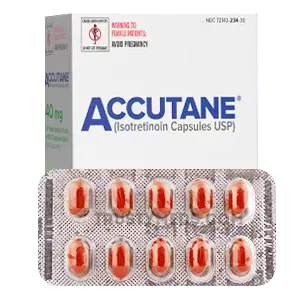
Accutane: Definitive Treatment for Severe Acne - Evidence-Based Monograph
| Dosaggio del prodotto: 10mg | |||
|---|---|---|---|
| Confezione (n.) | Per compresse | Prezzo | Acquista |
| 10 | €3.85 | €38.53 (0%) | 🛒 Aggiungi al carrello |
| 20 | €2.35 | €77.06 €47.09 (39%) | 🛒 Aggiungi al carrello |
| 30 | €1.71 | €115.59 €51.37 (56%) | 🛒 Aggiungi al carrello |
| 60 | €1.28 | €231.17 €77.06 (67%) | 🛒 Aggiungi al carrello |
| 90 | €1.14 | €346.76 €102.74 (70%) | 🛒 Aggiungi al carrello |
| 120 | €1.00 | €462.34 €119.87 (74%) | 🛒 Aggiungi al carrello |
| 180 | €0.86 | €693.52 €154.11 (78%) | 🛒 Aggiungi al carrello |
| 270 | €0.79 | €1040.28 €214.05 (79%) | 🛒 Aggiungi al carrello |
| 360 | €0.70
Migliore per compresse | €1387.03 €252.58 (82%) | 🛒 Aggiungi al carrello |
| Dosaggio del prodotto: 20mg | |||
|---|---|---|---|
| Confezione (n.) | Per compresse | Prezzo | Acquista |
| 10 | €4.28 | €42.81 (0%) | 🛒 Aggiungi al carrello |
| 20 | €2.57 | €85.62 €51.37 (40%) | 🛒 Aggiungi al carrello |
| 30 | €2.00 | €128.43 €59.93 (53%) | 🛒 Aggiungi al carrello |
| 60 | €2.00 | €256.86 €119.87 (53%) | 🛒 Aggiungi al carrello |
| 90 | €1.71 | €385.29 €154.11 (60%) | 🛒 Aggiungi al carrello |
| 120 | €1.50 | €513.72 €179.80 (65%) | 🛒 Aggiungi al carrello |
| 180 | €1.28 | €770.57 €231.17 (70%) | 🛒 Aggiungi al carrello |
| 270 | €1.21 | €1155.86 €325.35 (72%) | 🛒 Aggiungi al carrello |
| 360 | €1.12
Migliore per compresse | €1541.15 €402.41 (74%) | 🛒 Aggiungi al carrello |
| Dosaggio del prodotto: 30mg | |||
|---|---|---|---|
| Confezione (n.) | Per compresse | Prezzo | Acquista |
| 10 | €5.14 | €51.37 (0%) | 🛒 Aggiungi al carrello |
| 20 | €3.00 | €102.74 €59.93 (42%) | 🛒 Aggiungi al carrello |
| 30 | €2.57 | €154.11 €77.06 (50%) | 🛒 Aggiungi al carrello |
| 60 | €2.57 | €308.23 €154.11 (50%) | 🛒 Aggiungi al carrello |
| 90 | €2.28 | €462.34 €205.49 (56%) | 🛒 Aggiungi al carrello |
| 120 | €2.14 | €616.46 €256.86 (58%) | 🛒 Aggiungi al carrello |
| 180 | €1.90 | €924.69 €342.48 (63%) | 🛒 Aggiungi al carrello |
| 270 | €1.59 | €1387.03 €428.10 (69%) | 🛒 Aggiungi al carrello |
| 360 | €1.43
Migliore per compresse | €1849.38 €513.72 (72%) | 🛒 Aggiungi al carrello |
| Dosaggio del prodotto: 40mg | |||
|---|---|---|---|
| Confezione (n.) | Per compresse | Prezzo | Acquista |
| 10 | €5.99 | €59.93 (0%) | 🛒 Aggiungi al carrello |
| 20 | €3.42 | €119.87 €68.50 (43%) | 🛒 Aggiungi al carrello |
| 30 | €3.42 | €179.80 €102.74 (43%) | 🛒 Aggiungi al carrello |
| 60 | €3.14 | €359.60 €188.36 (48%) | 🛒 Aggiungi al carrello |
| 90 | €2.85 | €539.40 €256.86 (52%) | 🛒 Aggiungi al carrello |
| 120 | €2.78 | €719.20 €333.92 (54%) | 🛒 Aggiungi al carrello |
| 180 | €2.38 | €1078.80 €428.10 (60%) | 🛒 Aggiungi al carrello |
| 270 | €1.90 | €1618.21 €513.72 (68%) | 🛒 Aggiungi al carrello |
| 360 | €1.55
Migliore per compresse | €2157.61 €556.53 (74%) | 🛒 Aggiungi al carrello |
Accutane, or isotretinoin, is a potent oral retinoid and a cornerstone in the dermatological arsenal for severe, recalcitrant nodulocystic acne. It’s not a casual supplement; it’s a prescription medication with a profound mechanism of action and a significant risk profile that demands rigorous medical supervision. Its journey from a controversial chemotherapeutic agent to a transformative acne therapy is a story of careful risk-benefit analysis. I remember my first year in the clinic, terrified to prescribe it, having been drilled on the teratogenicity. But then came a patient, let’s call him Mark, 19, whose back was a landscape of painful, draining cysts. Topicals, multiple rounds of antibiotics—nothing made a dent. The psychological toll was palpable; he’d stopped swimming, a sport he loved. Starting him on Accutane was a heavy decision, but the transformation wasn’t just skin-deep. By month four, the active inflammation had ceased. The real win was a year later, at a follow-up, when he mentioned he’d joined a water polo team. That’s the other side of the data—the quality-of-life restoration that’s harder to quantify in studies.
1. Introduction: What is Accutane? Its Role in Modern Dermatology
What is Accutane? Accutane is the original brand name for isotretinoin, a synthetic oral retinoid (vitamin A derivative). It is classified as a prescription-only medication, specifically indicated for severe forms of acne vulgaris that have proven unresponsive to conventional therapies, including oral antibiotics and topical retinoids. Its significance lies in its unique ability to target all four major pathogenic factors of acne simultaneously: follicular hyperkeratinization, sebum production, Cutibacterium acnes colonization, and inflammation. For the right patient, a single course of Accutane can induce long-term remission or even a permanent cure, altering the disease course and preventing permanent scarring. The term “Accutane” is often used colloquially to refer to isotretinoin generically, though the original brand has been discontinued in many markets.
2. Key Components and Pharmacokinetics of Isotretinoin
The active pharmaceutical ingredient is 13-cis-retinoic acid (isotretinoin). It is not a “dietary supplement” but a synthesized molecule designed for specific receptor activity. Its pharmacokinetics are crucial for understanding its use and monitoring.
- Absorption: Isotretinoin is a lipophilic compound. Its oral bioavailability is significantly enhanced—approximately doubled—when taken with a high-fat meal. This isn’t a minor suggestion; it’s pharmacologically critical for consistent and adequate systemic exposure. We always tell patients, “Take it with your largest meal of the day, one that contains fats like avocado, peanut butter, or olive oil.”
- Metabolism: It is extensively metabolized in the liver via the cytochrome P450 system, primarily CYP2C8, CYP2C9, and CYP3A4. This is the cornerstone of many potential drug interactions. Its major metabolites include 4-oxo-isotretinoin and tretinoin (all-trans-retinoic acid), which also possess biological activity.
- Elimination: The elimination half-life of isotretinoin is approximately 21 hours, while its major metabolite, 4-oxo-isotretinoin, has a half-life of up to 24 hours, allowing for once-daily dosing.
3. Mechanism of Action of Accutane: Scientific Substantiation
The mechanism of action of isotretinoin is multifaceted and profound, explaining its unparalleled efficacy. Think of it as a systemic reset for the pilosebaceous unit.
- Dramatic Reduction of Sebum Production (Sebostasis): This is its most potent effect. Isotretinoin induces apoptosis (programmed cell death) in sebocytes, the cells that produce sebum. It can reduce sebum excretion rates by up to 90% within 4-6 weeks. A dry, non-greasy skin is often the first noticeable effect.
- Normalization of Follicular Keratinization: It prevents the hyperkeratinization (clogging) of the follicular infundibulum, allowing for normal desquamation and preventing the formation of the microcomedo, the primary acne lesion.
- Anti-inflammatory Action: Isotretinoin modulates the immune response, reducing the chemotactic attraction of neutrophils and other inflammatory cells to the follicle. It downregulates pro-inflammatory cytokines.
- Reduction of C. acnes Colonization: By creating an extremely dry, sebum-poor environment, it drastically reduces the population of C. acnes, which depends on sebum as a nutrient source.
The team debates often centered on whether the anti-inflammatory or sebosuppressive effect was primary. In practice, seeing patients like Maria, a 28-year-old with persistent inflammatory papules, it was clear the anti-inflammatory hit fast—her redness and tenderness improved within weeks, even before her skin was fully dry.
4. Indications for Use: What is Accutane Effective For?
Accutane is reserved for specific, severe acne presentations. Its indications for use are clearly defined.
Accutane for Severe Nodulocystic Acne
This is the classic indication. Characterized by numerous, large, painful nodular and cystic lesions that carry a high risk of permanent, pitted, or hypertrophic scarring.
Accutane for Moderate Acne Resistant to Conventional Therapy
This includes patients who have failed an adequate course (typically 3 months) of combined oral antibiotics (e.g., doxycycline, minocycline) and topical therapy (retinoid + benzoyl peroxide).
Accutane for Acne with a High Risk of Psychological Distress or Scarring
Even if technically “moderate,” acne causing significant depression, social anxiety, or dysmorphia, or in patients with a proven propensity to scar, can be a valid indication.
Accutane for Gram-Negative Folliculitis or Acne Fulminans
These are rarer, severe variants. Acne fulminans is a sudden, ulcerating, systemic syndrome often requiring concurrent systemic steroids.
I had a case, Liam, 16, with moderate but relentlessly scarring acne. His mother had severe pitted scars. The debate was whether he was “severe enough.” We opted for a low-dose regimen. The prevention of scars he would have certainly developed was the win—a “failed” insight from earlier in my career was waiting for severity to declare itself, which often meant scars had already set in.
5. Instructions for Use: Dosage and Course of Administration
Treatment is individualized. The cumulative dose is a key predictor of long-term remission. The standard goal is a total cumulative dose of 120-150 mg/kg of body weight over a typical 5-6 month course.
| Treatment Phase / Goal | Typical Daily Dosage | Frequency | Key Administration Note |
|---|---|---|---|
| Standard Course | 0.5 - 1.0 mg/kg/day | Divided into 1-2 doses | Must be taken with a high-fat meal. |
| Low-Dose Protocol | 0.1 - 0.5 mg/kg/day | Once daily | Used for milder cases, intolerance, or long-term management. |
| Pulse Therapy | Higher dose (e.g., 0.5-1 mg/kg/day) | 1 week per month | Less common, for specific cases under close supervision. |
Course of Administration: Patients must be registered in a mandatory risk management program (e.g., iPLEDGE in the US). Monthly follow-up visits are non-negotiable for pregnancy testing (for female patients), monitoring of side effects, and dispensing a 30-day supply only. Treatment continues until the cumulative dose is reached or clearance is achieved.
6. Contraindications and Drug Interactions of Accutane
This section is critical for safety and E-A-T.
Absolute Contraindications:
- Pregnancy, breastfeeding, or planning pregnancy. Isotretinoin is a potent teratogen (Category X). Two reliable forms of contraception are mandated.
- Severe hepatic impairment.
- Hypervitaminosis A.
- Hypersensitivity to isotretinoin or parabens (excipient).
Major Drug Interactions:
- Vitamin A supplements: Risk of additive toxicity (hypervitaminosis A).
- Tetracycline antibiotics (e.g., doxycycline, minocycline): Increased risk of benign intracranial hypertension (pseudotumor cerebri). This is a hard stop—we never co-prescribe.
- Systemic corticosteroids: May also increase intracranial pressure risk.
- St. John’s Wort: May reduce contraceptive efficacy via CYP3A4 induction, jeopardizing the teratogenicity prevention protocol.
Common Side Effects (>10% of patients): Cheilitis (nearly universal), xerosis (dry skin), dry mucous membranes (eyes, nose), epistaxis, photosensitivity, myalgias/arthralgias, and elevated serum lipids (triglycerides, cholesterol) and liver transaminases.
7. Clinical Studies and Evidence Base for Accutane
The clinical studies and scientific evidence for isotretinoin are extensive and robust, solidifying its place as the most effective anti-acne therapy.
- High-Dose Regimens: Landmark studies have shown success rates (significant clearance) of over 85% with a single 20-week course at 1 mg/kg/day, with most patients enjoying long-term remission.
- Low-Dose Regimens: Research, including a notable 2012 study in the Journal of Dermatological Treatment, demonstrates that lower doses (e.g., 0.25-0.5 mg/kg/day) are also highly effective, with improved tolerability, though potentially requiring longer treatment duration to reach cumulative dose targets.
- Impact on Scarring: Evidence confirms that early intervention reduces the development of new scars. A 2017 systematic review highlighted its role in mitigating both physical and psychological scarring.
- Relapse Rates: Relapse is more common with lower cumulative doses (<120 mg/kg). The need for a second course is estimated at 10-30%, often at a lower dose.
The data is clear, but real-world observation adds nuance. Some patients with predominantly truncal acne seem to need a higher cumulative dose for sustained remission. We tracked this informally for years before seeing a study hint at the same.
8. Comparing Isotretinoin with Similar Products and Choosing a Quality Product
When patients ask about Accutane similar treatments, the comparison is stark.
- vs. Oral Antibiotics: Antibiotics (tetracyclines) are suppressive, not curative. They target inflammation and C. acnes but not sebum production. Long-term use drives antibiotic resistance. Isotretinoin is curative and does not induce bacterial resistance.
- vs. Topical Retinoids (Tretinoin, Adapalene): These are excellent for comedones and mild-moderate inflammation but work locally. They cannot exert the systemic sebosuppressive effect of oral isotretinoin.
- vs. Hormonal Therapies (e.g., Oral Contraceptives, Spironolactone): Effective for hormonally-driven acne in women but, again, suppressive. They work via different mechanisms (androgen blockade) and are not an option for male patients.
Choosing a Quality Product: Since “Accutane” is often generic isotretinoin, the key is not brand but bioequivalence and manufacturing standards. Prescribing a generic from a reputable, FDA-inspected manufacturer is standard. The critical choice is made by the prescriber in selecting the appropriate patient and managing the process, not in selecting a brand.
9. Frequently Asked Questions (FAQ) about Accutane
What is the recommended course of Accutane to achieve lasting results?
The goal is a cumulative dose of 120-150 mg/kg, typically achieved over 5-6 months. Lasting remission is highly correlated with reaching this target.
Can Accutane cause depression or suicidal thoughts?
This is a heavily studied association. While a causal link is not definitively proven, isotretinoin is associated with mood changes in some individuals. A baseline assessment and monthly inquiry about mood are mandatory. For many, the improvement in acne alleviates pre-existing depression.
Can Accutane be combined with laser hair removal or waxing?
No. Due to the profound skin fragility and impaired wound healing, cosmetic procedures like waxing, dermabrasion, or laser should be avoided during treatment and for at least 6 months after completion to prevent scarring.
How is liver function monitored during treatment?
Baseline blood tests (lipid panel, liver function tests) are required, followed by repeat testing typically at month 1 and then every 3 months, or more frequently if doses are high or results are elevated.
Is the “Accutane flush” or long-term dryness permanent?
The initial flushing and dryness are almost universal but temporary. Some patients report persistently drier skin or mucous membranes long-term, but severe permanent effects are rare when managed properly with moisturizers and lip balm during therapy.
10. Conclusion: Validity of Accutane Use in Clinical Practice
In conclusion, Accutane (isotretinoin) remains the single most effective agent for severe, scarring, and treatment-resistant acne. Its validity in clinical practice is unquestioned, but it is not a casual prescription. It demands a disciplined, risk-aware framework involving stringent patient selection, meticulous education on teratogenicity, systematic monitoring for side effects, and a commitment to seeing the course through to an adequate cumulative dose. The risk-benefit profile is exceptionally favorable for the appropriate patient when managed within this guardrail system. It is a tool that requires respect and expertise, but in the right hands, it is profoundly disease-altering.
Longitudinal Follow-Up: Mark, the water polo player, remained clear for 8 years before some mild, occasional breakouts returned in his late 20s during periods of high stress. A very short, low-dose course (20 mg every other day for 3 months) resolved it. He recently sent an email with a wedding photo, thanking the team. Maria, the 28-year-old, has been off medication for 4 years with only minor monthly blemishes managed with a simple topical. She said, “I just wish I hadn’t been so afraid of it for so long. I wasted years trying everything else.” These are the outcomes that define its value—not just clearance, but the restoration of a life not dominated by a skin disease. The development struggles, the internal team disagreements over dosing aggressiveness, the constant vigilance—it’s all part of the package. You learn to balance the black-box warnings with the lived reality of patient transformation. It’s never a trivial decision, but for severe acne, it’s often the definitive one.
More info:
Popular Products
clonidine
Clonidine is a centrally acting alpha-2 adrenergic agonist, a medication with a fascinating and complex profile that extends far beyond its original indication for hypertension. In my two decades of clinical practice, I’ve moved from viewing it as just another antihypertensive to appreciating it as one of the most versatile tools in our pharmacological arsenal for managing dysautonomia, attention deficits, and a host of other conditions rooted in sympathetic nervous system overdrive.
bottled cialis
Prima di tutto, chiariamo subito di cosa stiamo parlando. Quando i pazienti o, più spesso, si sente in giro il termine “bottled cialis”, ci si riferisce a una presentazione del principio attivo Tadalafil – lo stesso del farmaco da prescrizione Cialis® – venduta in bottigliette, spesso come polvere sfusa o in capsule non marchiate. Non è un prodotto farmaceutico regolamentato nel senso tradizionale. Lo si trova online, in alcune palestre, su siti che aggirano la necessità della ricetta medica, promettendo discrezione e un prezzo basso.
mobic
Il meloxicam, commercializzato con il nome Mobic, è un agente antinfiammatorio non steroideo (FANS) appartenente alla classe degli oxicam. La sua particolarità, e il motivo per cui ha guadagnato un posto distintivo nell’armamentario terapeutico, risiede nella sua selettività inibitoria per l’enzima ciclossigenasi-2 (COX-2). In pratica, mentre i FANS tradizionali come il naprossene o l’ibuprofene inibiscono in modo non selettivo sia la COX-1 (coinvolta nella protezione della mucosa gastrica e nella funzione piastrinica) che la COX-2 (indotta durante i processi infiammatori), il meloxicam mostra una preferenza per la COX-2.
Finalo: Dispositivo per la Gestione Non-Farmacologica del Dolore Lombare Cronico - Monografia Evidenze-Based
Prima di arrivare al titolo, è necessario descrivere cos’è Finalo. Nella mia pratica di ortopedico, ho visto passare decine di dispositivi e promesse per il mal di schiena. Poi, circa tre anni fa, mi è capitato tra le mani un prototipo di Finalo. All’inizio ero scettico – un altro “cerotto tecnologico” – ma la documentazione preliminare parlava di un approccio diverso, non solo termico o massaggiante, ma di vera e propria neuromodulazione periferica.
mycelex g
Mycelex G è un farmaco antifungino topico disponibile in commercio in forma di crema vaginale. Il principio attivo è il clotrimazolo, un agente antimicotico appartenente alla classe degli azoli, ampiamente utilizzato per il trattamento delle infezioni da lievito (candidosi) vulvovaginali. Agisce alterando la permeabilità della membrana cellulare del fungo, portando alla sua morte. È un trattamento da banco (OTC) di prima linea per questa condizione comune, offrendo un sollievo sintomatico mirato.
latisse ophthalmic solution
Latisse è una soluzione oftalmica sterile, contenente il principio attivo bimatoprost, approvata inizialmente come farmaco per il trattamento dell’ipotrichosi delle ciglia, ovvero per aumentare la lunghezza, lo spessore e l’oscurità delle ciglia. È classificato come farmaco soggetto a prescrizione medica. La sua azione primaria si esplica a livello del follicolo pilifero, prolungando la fase anagen (di crescita) del ciclo del ciglio. Il suo utilizzo, tuttavia, si è esteso nella pratica clinica off-label, in particolare nel campo della tricologia, per il trattamento di alcune forme di alopecia, un aspetto che ha generato non poche discussioni tra i professionisti.
onglyza
Onglyza, conosciuto anche con il nome generico saxagliptin, è un farmaco antidiabetico orale appartenente alla classe degli inibitori della dipeptidil peptidasi-4 (DPP-4). È utilizzato in associazione a dieta ed esercizio fisico per migliorare il controllo glicemico in pazienti adulti con diabete mellito di tipo 2. Non è indicato per il trattamento del diabete di tipo 1 o della chetoacidosi diabetica. Funziona aumentando i livelli di incretine, ormoni che stimolano il rilascio di insulina in risposta ai pasti e sopprimono il rilascio di glucagone.
Snovitra Soft: Soluzione Rapida e Discreta per la Disfunzione Erettile - Monografia Evidenze-Based
Il prodotto in questione, Snovitra Soft, è una formulazione innovativa nel panorama della terapia per la disfunzione erettile. Si presenta come una compressa orodispersibile, una caratteristica che la differenzia significativamente dai classici farmaci per via orale. La compressa si scioglie rapidamente sulla lingua senza bisogno di acqua, offrendo un’assunzione discreta e conveniente. Il principio attivo è il Vardenafil, un inibitore della fosfodiesterasi di tipo 5 (PDE5) di comprovata efficacia, ma è la sua presentazione in forma “soft” a rappresentare il vero elemento distintivo, con implicazioni potenziali su tempi di azione e profilo di tollerabilità.
diabecon
Nel panorama degli approcci integrativi alla gestione dei parametri metabolici, un prodotto che ricorre spesso nelle discussioni tra professionisti e pazienti attenti è il Diabecon. Non stiamo parlando di un farmaco, è fondamentale chiarirlo subito, ma di una formulazione complessa e standardizzata a base di estratti vegetali, che trova il suo razionale nella millenaria tradizione della medicina ayurvedica, adattata però a standard di produzione moderni. La domanda che ci poniamo in clinica è sempre la stessa: può un prodotto del genere offrire un supporto tangibile, sicuro e misurabile in un quadro di gestione integrata del benessere metabolico?