A Ret Gel: Topical Retinoid Therapy for Acne and Photoaging - Evidence-Based Review
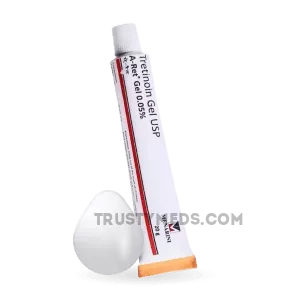
| Dosaggio del prodotto: 20 g | |||
|---|---|---|---|
| Confezione (n.) | Per tubo | Prezzo | Acquista |
| 1 | €52.23 | €52.23 (0%) | 🛒 Aggiungi al carrello |
| 2 | €32.11 | €104.46 €64.21 (39%) | 🛒 Aggiungi al carrello |
| 3 | €24.26 | €156.68 €72.78 (54%) | 🛒 Aggiungi al carrello |
| 4 | €20.12 | €208.91 €80.48 (61%) | 🛒 Aggiungi al carrello |
| 5 | €17.81
Migliore per tubo | €261.14 €89.04 (66%) | 🛒 Aggiungi al carrello |
Sinonimi | |||
Product Description: This monograph details a topical retinoid formulation, specifically a tretinoin gel, indicated for the treatment of acne vulgaris and the improvement of photoaged skin. It is a prescription-grade preparation that modulates cellular differentiation and proliferation. The following document synthesizes clinical data, pharmacological profiles, and practical clinical insights.
1. Introduction: What is A Ret Gel? Its Role in Modern Dermatology
A Ret Gel is a topical pharmaceutical preparation whose active ingredient is tretinoin, a first-generation retinoid. It falls under the category of retinoid therapy, a cornerstone in dermatology for managing acne vulgaris and mitigating signs of photoaging. For the searcher asking “what is a ret gel used for?”, it is fundamentally a cell-communicating agent that normalizes keratinization and stimulates collagen production. Its significance lies in its dual-action capability, addressing both a common inflammatory condition in adolescents and adults and the cumulative effects of sun damage, making it a versatile tool in clinical practice. The transition from older cream formulations to more elegant gels has improved tolerability for many patients, particularly those with oily skin types.
2. Key Components and Bioavailability of A Ret Gel
The composition of A Ret Gel is deceptively simple yet critically dependent on its formulation. The active pharmaceutical ingredient is all-trans retinoic acid (tretinoin). The release form—a gel—is typically alcohol-based, which enhances penetration into the pilosebaceous unit, a key target in acne pathogenesis. This is a crucial point for bioavailability.
Unlike oral isotretinoin, topical tretinoin has minimal systemic absorption, with its action confined almost entirely to the skin. However, the vehicle matters. Gel formulations often provide faster drying and less occlusion than creams, which can influence both efficacy and the initial retinoid reaction (erythema, peeling). Some formulations may include soothing agents like niacinamide or panthenol to mitigate irritation, though the core activity derives from tretinoin itself. The stability of the molecule in the gel matrix is paramount, as tretinoin is notoriously photolabile and oxidatively unstable.
3. Mechanism of Action of A Ret Gel: Scientific Substantiation
Understanding how A Ret Gel works requires a dive into retinoid receptor biology. Tretinoin binds to specific nuclear retinoic acid receptors (RARs) within keratinocytes and dermal fibroblasts. This binding alters gene expression, leading to its therapeutic effects.
For acne, the mechanism of action is multi-pronged: it normalizes follicular keratinization to prevent microcomedone formation (the precursor to all acne lesions), exerts anti-inflammatory effects by modulating cytokine pathways, and may even reduce sebum production indirectly. Think of it as unclogging the pipeline and calming the inflammation simultaneously.
For photoaging, the effects on the body are regenerative. Tretinoin upregulates collagen synthesis (types I and III), inhibits collagen-degrading matrix metalloproteinases (MMPs) induced by UV exposure, and disperses melanin granules, improving mottled hyperpigmentation. It essentially shifts the skin’s metabolism from a catabolic, damaged state to a more anabolic, reparative one. The scientific research behind this is robust, dating back to the pioneering work of Kligman and colleagues.
4. Indications for Use: What is A Ret Gel Effective For?
The primary indications for use are well-established through decades of clinical trials and practice.
A Ret Gel for Acne Vulgaris
It is a first-line treatment for acne, particularly effective for non-inflammatory (comedones) and inflammatory lesions (papules, pustules). It is considered a foundational therapy, often combined with antimicrobials like benzoyl peroxide or topical clindamycin for enhanced efficacy.
A Ret Gel for Photoaging
This is a premier treatment for fine wrinkles, tactile roughness, and hyperpigmentation caused by chronic sun exposure. Improvement is gradual, over months, but is grounded in actual structural repair of the dermis, not just superficial hydration.
A Ret Gel for Maintenance Therapy
Due to its effects on cellular turnover, it is excellent for prevention of acne relapse and for maintaining improvements in skin texture and clarity after other procedures or courses of treatment.
5. Instructions for Use: Dosage and Course of Administration
Proper instructions for use are vital to ensure adherence and manage expectations. The universal rule is “start low and go slow.”
| Indication | Typical Strength | Frequency | Application Tips |
|---|---|---|---|
| Acne Treatment (Initiation) | 0.025% or 0.05% gel | Every other night (or 3x/week) | Apply a pea-sized amount to entire affected area on clean, dry skin. |
| Photoaging Treatment | 0.025%, 0.05%, or 0.1% gel | Every other night, increasing as tolerated | Apply a pea-sized amount to entire face, avoiding eyes and lips. |
| Maintenance Therapy | Patient’s tolerated strength | 2-3 times per week | As above, to maintain results. |
The course of administration is long-term for photoaging and typically several months for significant acne clearance. A “retinization” period of 2-6 weeks, where peeling and redness are common, should be explained upfront. Moisturizers and non-comedogenic sunscreens (SPF 30+) are mandatory adjuvants.
6. Contraindications and Drug Interactions with A Ret Gel
Patient safety is paramount. Absolute contraindications include pregnancy, known hypersensitivity to any component, and use on eczematous or severely sunburned skin. The question “is it safe during pregnancy?” has a clear answer: Category C; it is contraindicated due to theoretical teratogenic risk, though systemic absorption is minimal.
Side effects are primarily local: dryness, erythema, scaling, and a burning or stinging sensation. These usually diminish with continued use. More severe irritation can occur.
Key interactions with other topical products are crucial. Concomitant use of other potent topical agents (e.g., benzoyl peroxide, salicylic acid, other exfoliants) can increase irritation. It is often recommended to apply them at different times of day. Drug interactions with systemic medications are rare but caution is advised with other photosensitizing drugs. Concomitant use of abrasive cleansers or procedures (e.g., waxing, strong chemical peels) should be avoided.
7. Clinical Studies and Evidence Base for A Ret Gel
The clinical studies supporting tretinoin are extensive. For acne, a meta-analysis in the Journal of the American Academy of Dermatology confirmed its superiority over vehicle in reducing lesion counts. For photoaging, landmark studies published in JAMA Dermatology (formerly Archives of Dermatology) demonstrated histologically proven increases in collagen and clinical improvement in fine wrinkles after 4-12 months of use.
The scientific evidence is not just about improvement; it’s about reversal of damage. Biopsies show a compaction of the stratum corneum, a repaired epidermal barrier, and a rejuvenated papillary dermis. This level of effectiveness documented in peer-reviewed literature is what separates prescription retinoids from over-the-counter retinols. Physician reviews consistently rank it as a gold-standard topical agent.
8. Comparing A Ret Gel with Similar Products and Choosing a Quality Product
When patients ask about A Ret Gel similar products or which retinoid is better, the discussion involves other retinoids. Tretinoin (A Ret Gel) is compared to adapalene (often more tolerable, OTC in some markets), tazarotene (more potent, potentially more irritating), and retinol (a precursor, less potent, OTC).
How to choose often comes down to:
- Condition: Tretinoin has the broadest data for both acne and photoaging.
- Skin Sensitivity: Adapalene may be better for very sensitive skin.
- Prescription vs. OTC: Tretinoin requires a prescription, ensuring correct diagnosis and strength.
- Formulation: Gel for oily skin, cream for drier skin.
A quality product will be from a reputable pharmaceutical manufacturer, packaged in an opaque or aluminum tube to protect stability, and have a clear concentration listed.
9. Frequently Asked Questions (FAQ) about A Ret Gel
What is the recommended course of A Ret Gel to achieve results?
For acne, initial improvement may be seen in 6-8 weeks, with optimal results at 3-6 months. For photoaging, significant texture and wrinkle improvement typically requires 6-12 months of consistent use.
Can A Ret Gel be combined with vitamin C or hyaluronic acid?
Yes, but with timing. Vitamin C serum is best used in the morning. Hyaluronic acid can be an excellent moisturizer used after applying A Ret Gel at night to counteract dryness.
Does A Ret Gel make skin more sensitive to the sun?
It does not increase the risk of sunburn per se, but it does accelerate skin cell turnover, exposing newer, more vulnerable cells. Daily, broad-spectrum sunscreen is non-negotiable.
How should I manage the initial peeling and redness?
Reduce frequency to every third night, ensure skin is completely dry before application, and use a gentle, fragrance-free moisturizer. Avoid other active ingredients until your skin acclimates.
10. Conclusion: Validity of A Ret Gel Use in Clinical Practice
In conclusion, the risk-benefit profile for A Ret Gel is highly favorable for appropriate patients. Its mechanisms are well-understood, its efficacy is substantiated by a vast clinical evidence base, and its side effects are predictable and manageable. It remains a fundamental, evidence-based tool for treating acne vulgaris and photoaging. The key to success lies in proper patient education regarding the initial adjustment period and the critical importance of photoprotection.
Personal Anecdote & Clinical Experience:
You know, when we first started getting these newer gel formulations in the clinic, there was some debate in our team. The old guard was loyal to the creams, arguing better tolerability. I remember Dr. Alves, our senior derm, was skeptical—“drying, too irritating for most,” he’d say. But I had this one patient, Marco, a 24-year-old chef with persistent, oily, papulopustular acne. The creams just seemed to sit on his skin, not really helping. We switched him to the 0.05% gel. The first two weeks were tough, I won’t lie. He called, frustrated with the peeling. We almost stopped. But we pushed through with a “sandwich” method (moisturizer, then gel, then moisturizer) and strict every-other-night scheduling.
By week 8, the change was undeniable. His inflammation was down dramatically. The real “aha” moment came at his 4-month follow-up. His skin wasn’t just clear; the texture was smoother, the post-inflammatory erythema had faded significantly—a benefit we hadn’t even focused on initially. That case changed my approach. The gel, for the right patient with oily skin, wasn’t just an alternative; it was often superior because it delivered the active ingredient more effectively into the sebaceous follicles.
Another unexpected finding was with my photoaging patients. I had a woman in her late 50s, Elena, using it for fine lines. She came back after a year and mentioned, almost offhandedly, that the actinic keratoses on her cheek had flattened and disappeared. That’s the immunomodulatory and normalizing effect at work, beyond just cosmesis. It’s these longitudinal follow-ups that reveal the full picture.
We’ve had failures, of course. Patients who couldn’t tolerate even the lowest strength, or who wouldn’t commit to sunscreen. But for those who follow the protocol, the patient testimonials aren’t just about looking better; they’re about not having to hide, about confidence returning. It’s a powerful thing to see. The development of these formulations is always a struggle between potency, stability, and tolerability, but when it clicks, it’s a cornerstone therapy that really works. Marco still comes for an annual check-up, now on a maintenance dose twice a week, and his skin remains clear. That’s the real-world evidence that complements the trial data.
More info:
Popular Products
dipyridamole
Dipyridamole è un farmaco vasodilatatore e antiaggregante piastrinico di sintesi, appartenente alla classe dei pirazolopirimidinedioni. Storicamente introdotto come agente coronarodilatatore per il trattamento dell’angina pectoris, il suo ruolo terapeutico si è radicalmente evoluto. Oggi, il suo impiego principale si fonda sulla potente attività antiaggregante, che inibisce l’aggregazione piastrinica attraverso molteplici meccanismi sinergici, rendendolo un cardine nella prevenzione secondaria degli eventi trombotici, in particolare in ambito cerebrovascolare. La sua unicità farmacologica lo distingue nettamente dagli altri antiaggreganti come l’acido acetilsalicilico (ASA) o i ticagrelor, posizionandolo come opzione terapeutica preziosa in scenari clinici specifici, sia in monoterapia che in combinazione.
Tastylia OD Strip: Somministrazione Sublinguale di Tadalafil per DE e IPB - Monografia Evidence-Based
Prima di entrare nel titolo e nella struttura formale, permettimi di descrivere cos’è realmente questo prodotto, come l’ho visto utilizzare nella mia pratica e le battaglie dietro le quinte per farlo accettare. Il Tastylia OD Strip non è semplicemente “un’altra forma di tadalafil”. È un dispositivo medico – una pellicola orodispersibile sublinguale – che ha cambiato il paradigma di somministrazione per un farmaco ben noto. Ricordo quando il rappresentante lo portò in studio per la prima volta, quasi con scetticismo.
betahistine
Betahistine è un agente farmacologico strutturalmente simile all’istamina, utilizzato principalmente nella gestione dei disturbi vestibolari, in particolare la malattia di Ménière. Agisce come un agonista parziale dei recettori dell’istamina H1 e, in misura più significativa, come un antagonista dei recettori H3 a livello del sistema nervoso centrale. Questo profilo farmacodinamico unico porta a un aumento del rilascio di istamina endogena dai neuroni istaminergici, modulando così l’attività dei nuclei vestibolari e migliorando la microcircolazione nell’orecchio interno.
Cytotec (Misoprostolo): Gestione Medica in Ginecologia e Ostetricia - Monografia Evidenze-Based
Il Cytotec è il nome commerciale di un farmaco a base di Misoprostolo, un analogo sintetico della prostaglandina E1. Inizialmente sviluppato e commercializzato per la prevenzione delle ulcere gastriche indotte da FANS, il suo profilo farmacologico – che include potenti effetti sulla contrazione della muscolatura liscia uterina e sulla maturazione cervicale – ne ha drasticamente ampliato le applicazioni in ambito ginecologico e ostetrico. Oggi, il Misoprostolo (Cytotec) rappresenta una pietra miliare nella gestione medica di condizioni come l’aborto, il parto indotto e la prevenzione dell’emorragia post-partum, nonostante il suo uso in molte di queste indicazioni sia spesso “off-label”, basato su solide evidenze di linee guida internazionali.
Celebrex: Gestione Selettiva del Dolore e dell'Infiammazione - Monografia Basata sull'Evidenza
Celebrex è il nome commerciale di un farmaco antinfiammatorio non steroideo (FANS) appartenente alla classe degli inibitori selettivi della COX-2. Il suo principio attivo è il celecoxib. A differenza dei FANS tradizionali (come ibuprofene o naprossene), che inibiscono sia l’enzima COX-1 che COX-2, Celebrex agisce in modo preferenziale sulla COX-2. Quest’enzima è coinvolto principalmente nella sintesi delle prostaglandine che mediano il dolore, l’infiammazione e la febbre. L’inibizione selettiva della COX-2 mira a fornire l’efficacia antinfiammatoria e analgesica riducendo il rischio di effetti collaterali gastrointestinali (come ulcere e sanguinamenti) associati all’inibizione della COX-1, che svolge un ruolo protettivo sulla mucosa gastrica.
Micronase (Γλυβουριδάμη): Αποτελεσματικός Έλεγχος Γλυκόζης για Διαβήτη Τύπου 2 - Επιστημονική Ανασκόπηση
Πριν προχωρήσουμε στην πλήρη μονογραφία, ας περιγράψουμε τι είναι το Micronase. Πρόκειται για ένα φάρμακο, όχι συμπλήρωμα διατροφής ή ιατρική συσκευή, που ανήκει στην κατηγορία των σουλφονυλουριών δεύτερης γενιάς. Η ενεργός ουσία του είναι η γλυβουριδάμη. Χρησιμοποιείται εδώ και δεκαετίες ως θεραπεία πρώτης γραμμής για τον έλεγχο της γλυκόζης στο αίμα σε ασθενείς με σακχαρώδη διαβήτη τύπου 2. Η δράση του βασίζεται στην τόνωση της έκκρισης ινσουλίνης από τα β-κύτταρα του παγκρέατος.
kaletra
Il farmaco in questione è un agente antiretrovirale di combinazione, ampiamente utilizzato nella terapia dell’infezione da HIV-1. Si tratta di una compressa rivestita che contiene due principi attivi fondamentali: il lopinavir e il ritonavir. Questa combinazione non è casuale; il ritonavir, a basse dosi, agisce principalmente come potenziatore farmacocinetico, inibendo il metabolismo epatico del lopinavir e aumentandone così in modo significativo la concentrazione plasmatica e la durata d’azione. È un pilastro storico nella classe degli inibitori della proteasi (PI), spesso inserito in regimi di prima linea o di salvataggio.
Combivir: Terapia di Combinazione Antiretrovirale per l'HIV-1 - Revisione Evidence-Based
Combivir è il nome commerciale di una combinazione farmacologica fissa di due principi attivi antiretrovirali: lamivudina (150 mg) e zidovudina (300 mg). È formulato in compresse rivestite per somministrazione orale. Questo farmaco, classificato come un inibitore nucleosidico della trascrittasi inversa (NRTI), è stato per anni una pietra angolare nella terapia di combinazione per l’infezione da virus dell’immunodeficienza umana di tipo 1 (HIV-1). Il suo ruolo è stato fondamentale nel trasformare l’HIV da una condizione quasi uniformemente fatale a una malattia cronica gestibile, sebbene il suo utilizzo in contesti con risorse limitate rimanga particolarmente significativo.
Copegus: Terapia di Combinazione per l'Epatite C Cronica - Monografia Evidence-Based
Product Description: Copegus, nome commerciale del principio attivo ribavirina, è un antivirale ad ampio spettro utilizzato in combinazione con altri farmaci, principalmente l’interferone pegilato o più recentemente con agenti antivirali ad azione diretta (DAA), per il trattamento dell’infezione cronica da virus dell’epatite C (HCV). Si presenta in compresse da 200 mg. Non è un integratore alimentare, ma un farmaco soggetto a prescrizione medica, il cui uso è regolamentato e basato su protocolli terapeutici specifici.